
The first hard acceleration of the day is a poor time to discover a loose wheel or a steering problem. A short inspection can catch obvious faults while the car is still on the bench. Use the manual for your exact model as the authority; this routine is a way to organise the check, not a substitute for its instructions.
Start with the battery disconnected and the vehicle stable. Look over the chassis after the previous run rather than assuming that a car which drove home is ready to go again.
Follow a consistent route around the car
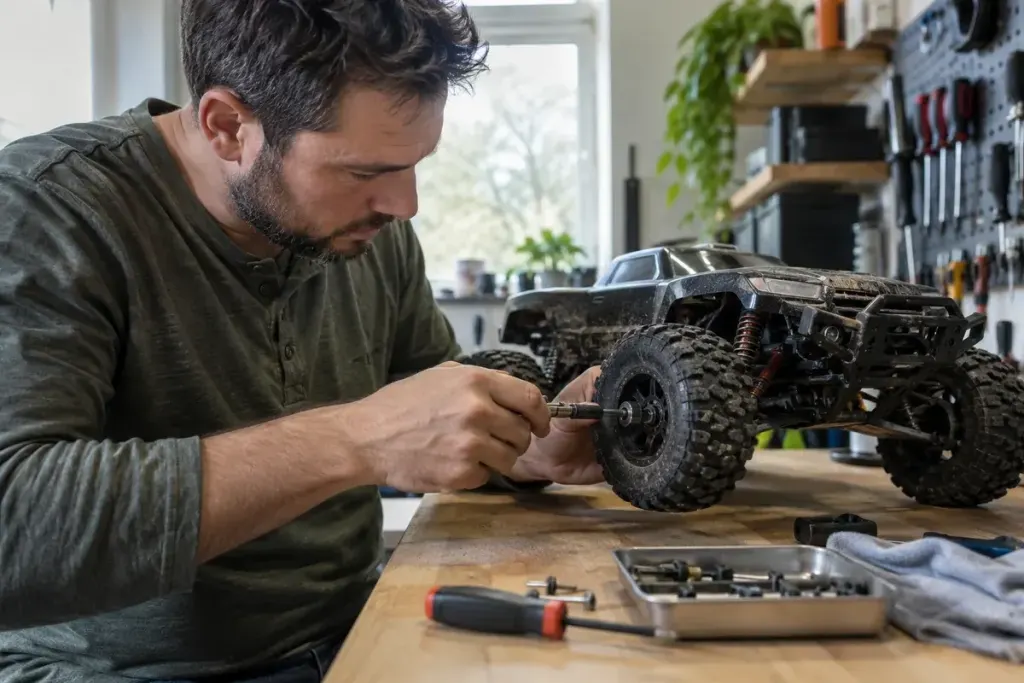
Inspect the wheels, tyres and accessible fasteners. Look for damage, trapped debris and anything that has moved. Check wheel nuts using the correct tool and manufacturer guidance; tightening harder is not always better. Traxxas includes regular wheel-nut and hardware checks in its Drag Slash owner’s manual. Other models have their own requirements.
Move the steering and suspension gently with power disconnected where the manual permits. Notice a new restriction, rubbing tyre or unusual play. Do not force a binding mechanism. If a part was replaced, compare the installation with the diagram rather than relying only on its appearance.
Inspect the power system before connecting it
Check the battery, leads and connectors for damage. Do not run or charge a visibly damaged or swollen battery. Follow the battery and charger instructions for handling and disposal; different chemistries require different treatment. Make sure the pack can be secured without crushing wires or exposing them to moving parts.
At the running area, follow the model’s specified transmitter and vehicle power sequence. Keep the car positioned safely for the prescribed steering and throttle checks, with people clear. Verify that the steering direction and neutral behaviour are correct before putting the car into ordinary use.
Let the first pass be a check
Begin slowly in a suitable clear area. Listen for a new clicking sound, watch whether the car tracks as expected and confirm that braking responds properly. Stop if something seems wrong. A small fault can become a much larger repair after a full-speed run.
Keep a brief maintenance note when you find a recurring issue. A wheel nut that repeatedly loosens may need a closer look at the assembly, not another habitual twist of the wrench. The best pre-run routine is short enough to repeat and specific enough to notice change.
Another practical question: Changing RC Gearing? Keep Notes Before Chasing More Speed.