
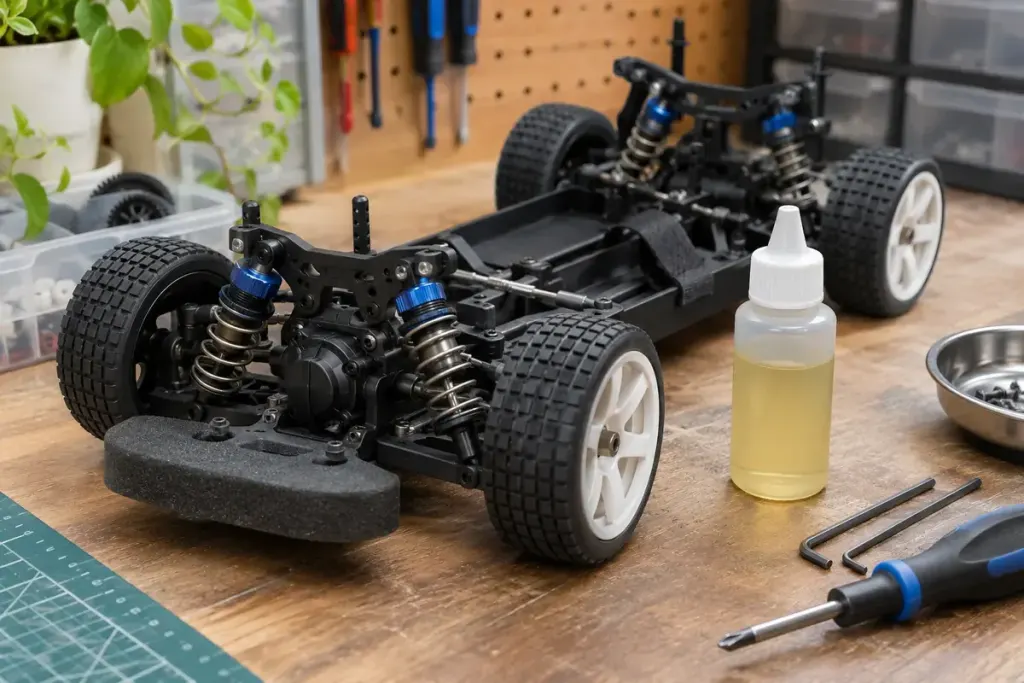
A hobby forum recommends thicker differential oil for better cornering. Before buying a bottle, ask which differential, which car and which cornering problem the writer means. A front, rear or centre differential can affect the car differently, and the same change need not suit another surface.
In a suitable sealed differential, silicone oil influences resistance to differences in wheel speed. Higher viscosity generally increases that resistance, but the handling result depends on the drivetrain, tyres, surface and how the car is driven. It is not a direct scale from “bad handling” to “good handling”.
A Traxxas model manual provides an example of manufacturer guidance for differential setup and maintenance. Use the manual for your exact model and differential design; some assemblies require a different lubricant or service approach.
Describe the symptom before changing the oil
Write down where the problem appears: entering a corner off throttle, applying power at the exit or driving across a low-grip patch. Note tyres, surface, battery condition and other relevant setup details. “It spins out” is less useful than a repeatable description of when and how it happens.
First check for mechanical faults such as binding, damage or leakage using the manufacturer’s service instructions. Tuning around a fault can hide its cause and make later comparisons confusing.
Record the current oil and any available manufacturer viscosity designation before a change. Brand-labelled weights are not always safely comparable by the printed number alone. Do not replace differential fluid with an unrelated household or automotive oil because its number looks similar.
Make one comparison you can repeat
Use an appropriate controlled driving area and change one setup variable at a time. Compare the same type of corner at similar speeds, paying attention to both the original problem and any new behaviour. A change that improves one part of a lap may make another less predictable.
Keep the original setup note so you can return to it. Follow the manual for filling, sealing, reassembly and inspection, and work on an unpowered vehicle. The useful outcome is understanding how one documented adjustment affects your car, rather than collecting increasingly extreme oil values from unrelated builds.