
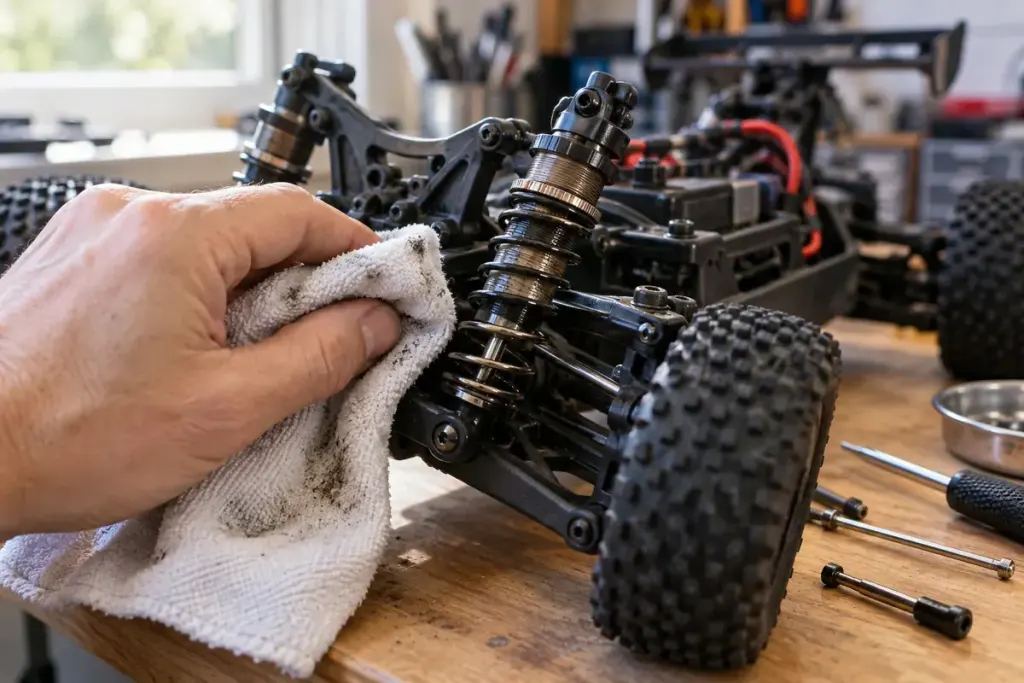
A dusty ring on an RC shock body catches your eye after a run. It may be a small residue, or it may be evidence that oil is escaping. Before ordering a new set, identify what you can actually observe.
Clean enough to see the source
Switch the model off and make it safe according to its manual. Use the approved cleaning method around the shock, avoiding solvents or tools that can damage seals or scratch the shaft. Note which corner is affected and photograph the area before and after cleaning.
Look for a bent or visibly damaged shaft, a loose external fitting or fresh oil appearing again. Do not confuse mud or another lubricant with shock oil solely because the area looks dark. Compare with the other shocks, while remembering that front and rear setups may intentionally differ.
Keep the service specific to the model
Find the exploded diagram and maintenance procedure for the exact shock assembly. Seal kits, oil specifications and filling methods are not universal. Replacing the oil with a much thicker fluid is not a repair for a damaged seal, and mixing unfamiliar fluids can make the result harder to understand.
If you are new to servicing shocks, ask an experienced hobby technician to demonstrate the procedure. Keep small components in order and record any settings before disassembly. Do not open an unfamiliar assembly simply because another model’s tutorial looks similar.
After an appropriate repair, inspect for leakage and check suspension movement as the manufacturer directs before a normal run. Begin with a controlled test and stop if the model behaves unpredictably or a part binds.
Your maintenance note can be brief: model, affected corner, observed leak location, parts used and test result. That record helps distinguish a recurring fault from a new setup change. The objective is dependable suspension behaviour, not replacing four assemblies because one dusty mark was difficult to interpret.