
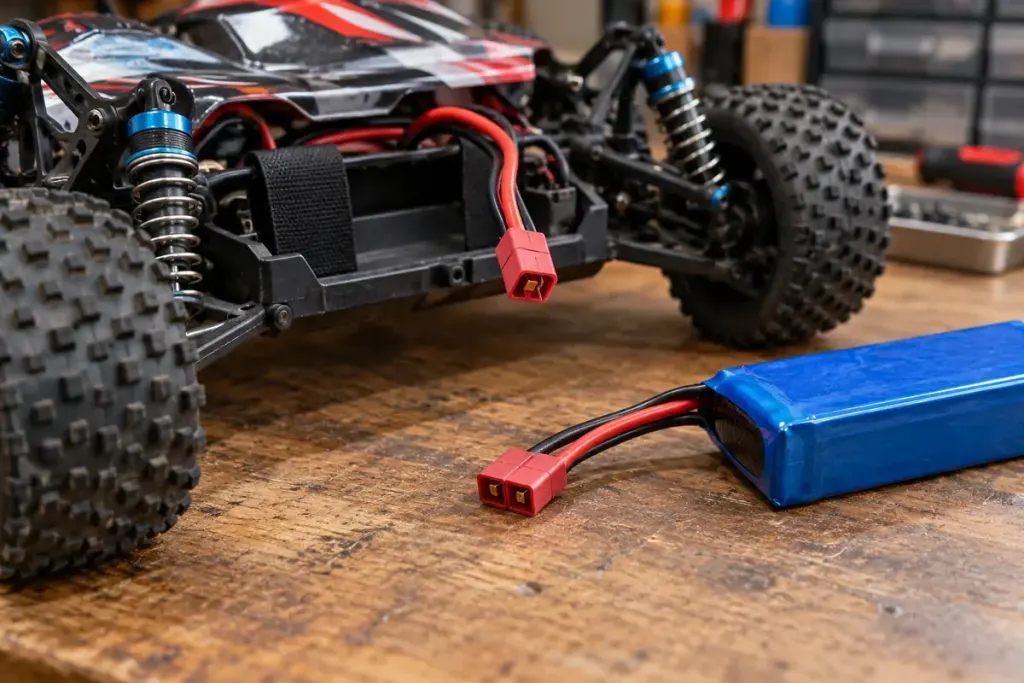
The replacement battery has a plug that looks close enough in the listing photo. That is not a compatibility check. An RC battery must suit the model’s electrical requirements, physical space, connector arrangement and charging system together.
A model-specific example is the Traxxas TRX-6 manual, which includes battery and charger instructions. Consult the manual for your actual model rather than adopting another vehicle’s specifications.
Start with the model manual
Record the supported battery chemistry, voltage or cell count, size limits and other specifications required by the manufacturer. Identify the model and any relevant equipment changes. Advice for an apparently similar car may not apply to the electronics installed in yours.
With the model switched off and the battery safely disconnected, photograph the existing intact connector for reference. Do not short its terminals or remove insulation to inspect it. A shop or manufacturer can help identify an unfamiliar connector.
A matching shell is not the whole answer
Confirm the exact connector type and polarity through reliable product information. Check whether an adapter is explicitly supported; an improvised adapter does not make an unsuitable battery appropriate. Do not alter wiring or connectors without the necessary competence and manufacturer guidance.
Compare the battery’s dimensions with the tray, restraint and cable route. A pack that can be squeezed into place may still leave wires pinched or the battery inadequately secured. The retention system must work as intended.
Include the charger in the purchase
Verify that the charger and required connections support the exact battery chemistry and configuration. Follow the battery and charger instructions for charging, storage and handling. A connector that fits physically does not establish the correct charging mode.
Do not use a damaged, swollen or otherwise suspect pack. Keep it out of service and follow the manufacturer’s and local disposal guidance rather than trying to make it fit or revive it.
Save the confirmed part number and compatibility advice with your model notes. When the order arrives, compare the actual label and connector with the specification before use. The useful shopping list contains a complete, verified battery requirement—not just the colour of a plug remembered from the last run.