
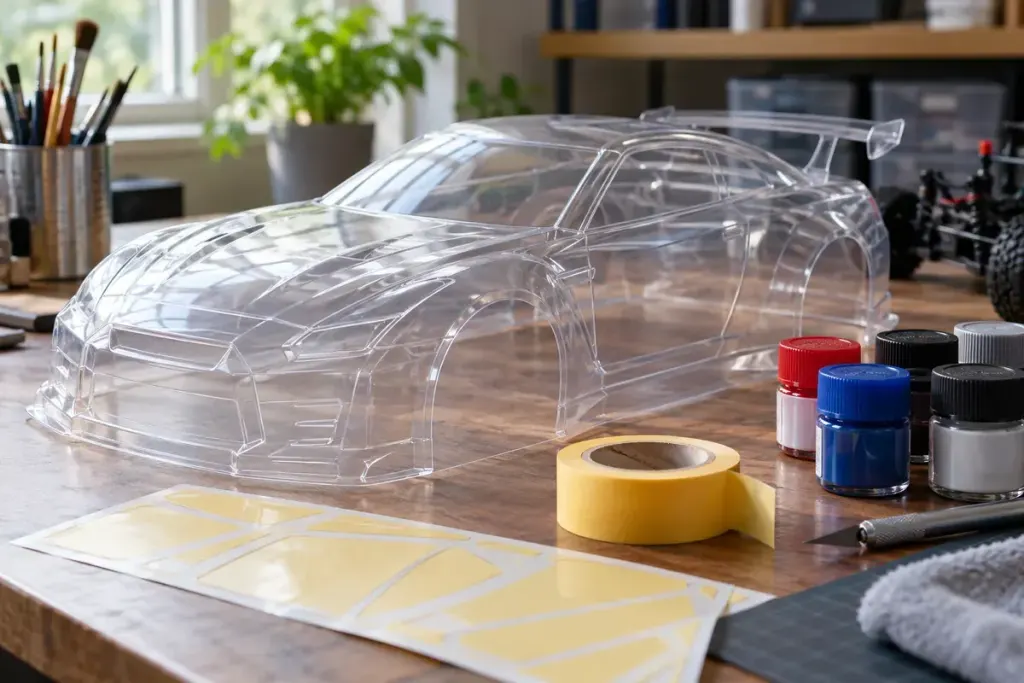
A clear RC body and a rigid opaque model body can require different paints and painting sequences. Choosing only by colour can leave you with a product that is unsuitable for the surface or flexibility of the shell.
Read the body instructions before the paint shelf
Identify the material and the manufacturer’s intended method. For example, Tamiya’s M-05 body instructions specify polycarbonate paint applied from inside the clear shell. That is a specific product example, not permission to apply the same method to every RC body.
Check the paint’s labelled compatibility and preparation instructions. A paint formulated for another plastic may not provide the required adhesion or flexibility. If the material is unknown, resolve that uncertainty with the supplier before spraying.
Plan the viewing side and paint order
On a clear body painted from inside, you view the colour through the shell. The sequence of masking, colour and any backing layer therefore needs to follow the relevant instructions. Do not improvise the order from an exterior-painted model.
Use an appropriate scrap or spare sample where available to test the complete combination, including preparation and backing. Keep the test separate from the final shell until you are satisfied with the result.
- Follow ventilation and protective-equipment guidance on the product.
- Keep spray products away from ignition sources.
- Respect drying and recoating instructions.
- Check when any protective film should be removed.
Do not spray near assembled electronics or assume that a dry-looking surface has completed every curing stage. Prepare a clean work area suited to the product’s safety instructions.
Write down the material, paint product and sequence that worked. That record matters more than a photograph of the finished colour, because two visually similar shells may need different preparation the next time you build.