
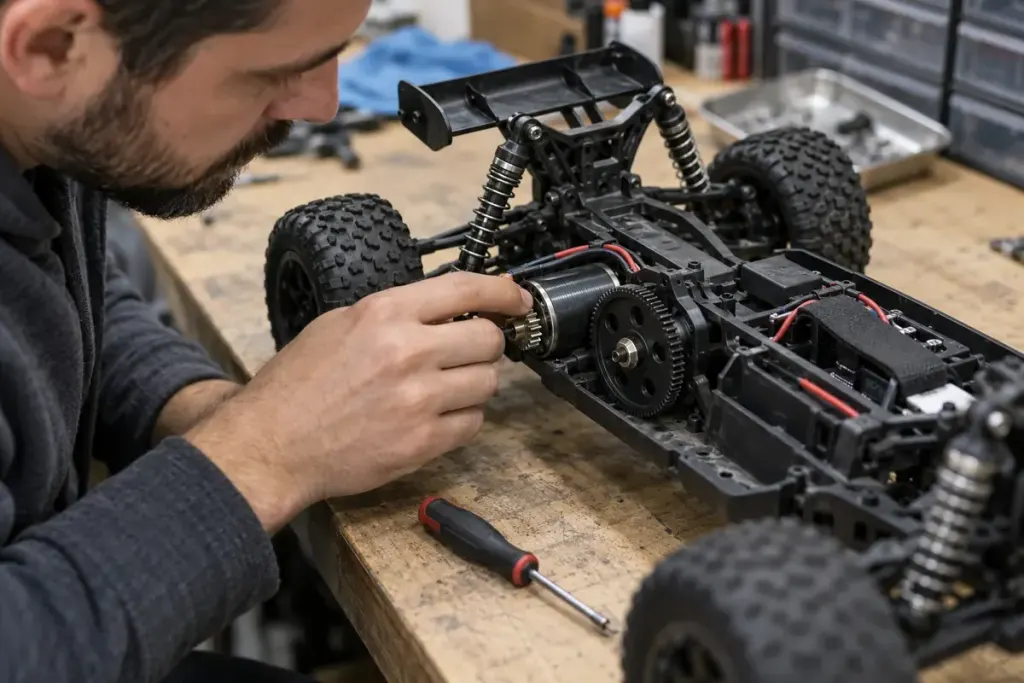
After replacing a pinion or moving the motor, an RC car’s gears may no longer mesh as they did before. Tightening the mounting screws is only part of the job. The relationship between the teeth needs checking again.
Traxxas’s gear-mesh guidance explains model-type-specific adjustment methods and warns that incorrect mesh can strip spur gears. Use the manual for your exact vehicle, gear combination, and mounting system. Do not assume that a paper-strip method or thickness applies to every RC design.
Inspect with the power safely disconnected
Before handling the drivetrain, disconnect the battery and follow the model’s maintenance precautions. Keep fingers, loose clothing, and tools away from powered rotating parts. A bench test should not become an attempt to adjust moving gears.
Check the teeth for existing damage and confirm that the replacement parts are compatible. A damaged spur will not become healthy because the motor is moved closer. Follow the manufacturer’s sequence for setting the mesh and securing the mount.
Rotate the drivetrain by hand as instructed and check through a full revolution rather than at only one position. Look for binding or inconsistent engagement. If the behaviour changes around the gear, investigate alignment or damage instead of choosing a compromise that hides one tight spot.
Keep a workshop note with the vehicle model, gear sizes, adjustment method, and the problem that prompted the work. That helps distinguish a new issue from an unresolved one after the next run.
Refit guards and complete the manufacturer’s checks before operating the model. If you are unsure whether the mesh is correct, have an experienced technician inspect it. A quiet-looking installation on the bench is not a substitute for the specified mechanical checks.