
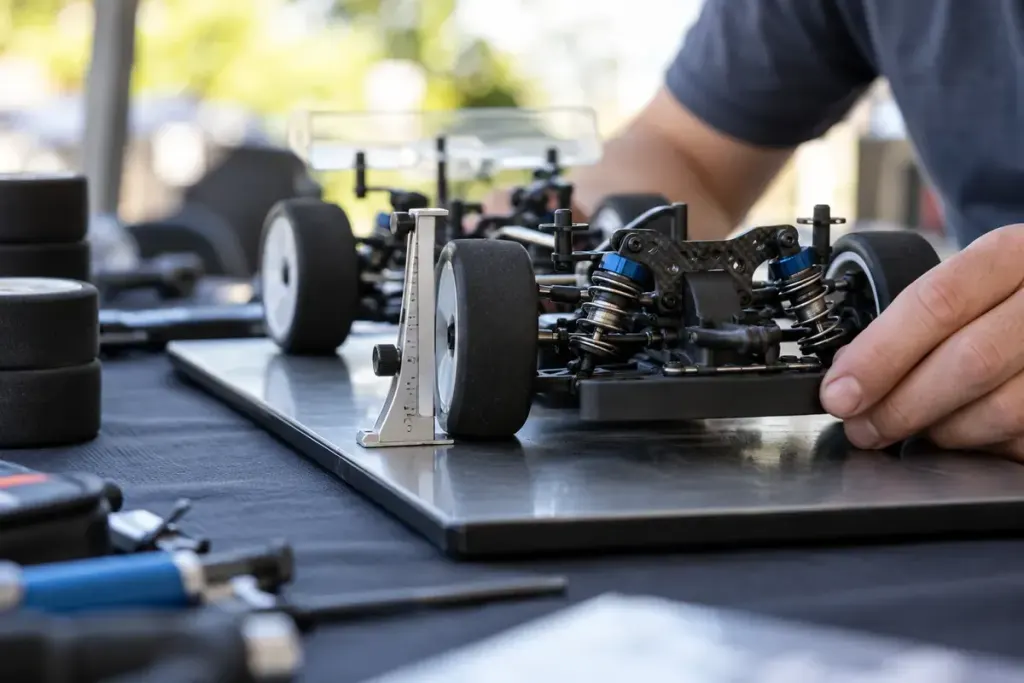
Viewed from the front, the tops of an RC car’s wheels lean slightly inward. That tilt is camber. It is different from toe, which concerns where the wheels point when viewed from above, and different again from steering trim.
The Traxxas manual for model 58034-8 describes camber adjustment and measuring with the vehicle at normal ride height with its battery installed. Its numerical settings belong to that model; use your own model’s manual for the baseline.
Look from the right direction
From directly in front or behind, compare the wheel to vertical. The top leaning inward is negative camber; outward is positive. A photograph taken at an angle can distort the impression, so use a level setup surface and a suitable gauge for a meaningful measurement.
Check the model in its normal ready-to-run condition, following the manual. Suspension position matters. Holding the chassis in the air and measuring a hanging wheel may not describe the angle it has when supporting the vehicle.
Change one setting with a record
Before adjusting anything, write down the existing setup and check for bent, loose or damaged parts. A wheel leaning differently because a component is damaged is not an invitation to compensate blindly with a turnbuckle.
If the model allows adjustment, make a small documented change using the manufacturer’s procedure and remeasure. Then test in a safe, controlled area appropriate to the model. Keep surface, tyres and other settings consistent enough to interpret the result.
For example, note whether a change affected the behaviour you were investigating rather than simply writing “more grip.” A change that helps one cornering situation may introduce another compromise. There is no single visually aggressive angle that is best for every vehicle and surface.
Return to the recorded baseline if the result is unclear. A setup notebook makes experimentation reversible and helps distinguish an actual improvement from the appeal of a different stance on the bench.
Camber becomes easier to understand once wheel tilt, steering direction and suspension condition are treated as separate questions.