
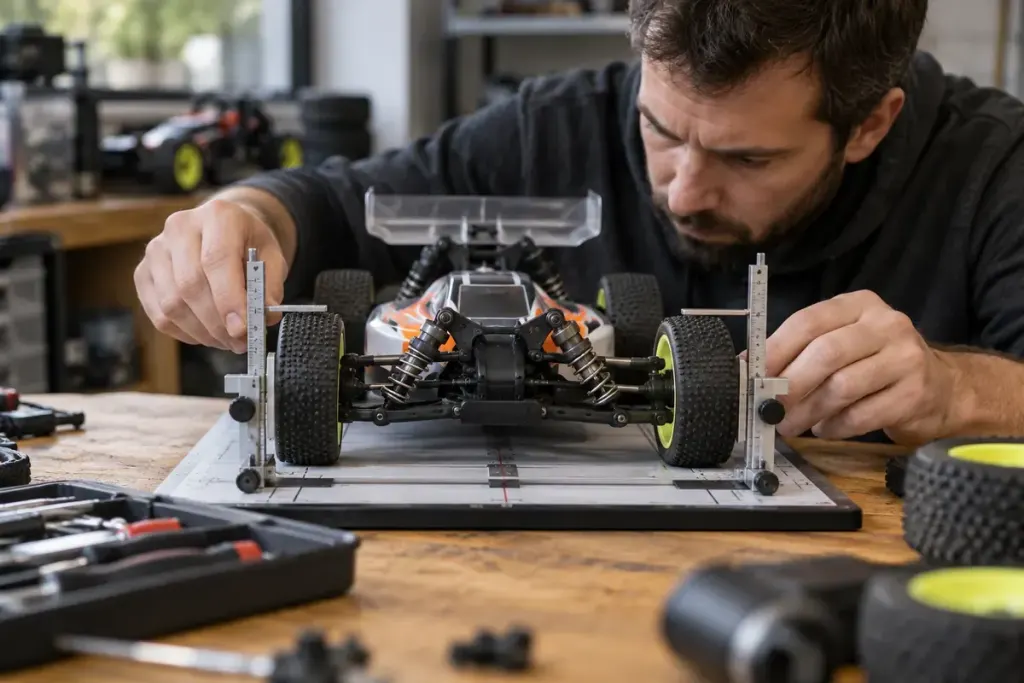
Viewed from above, an RC car’s front wheels may point slightly towards each other or slightly apart. That relationship is called toe. It is different from camber, which concerns how the wheels lean when viewed from the front or rear.
Traxxas explains the basic distinction in its wheel-alignment guide: front edges pointing inward indicate toe-in; front edges pointing outward indicate toe-out. The appropriate setting and adjustment method depend on the model.
Establish a baseline before turning a link
Consult the manual for the recommended setup and identify which components are adjustable. Check for loose parts, damage and excessive play first. An alignment adjustment cannot reliably compensate for a bent component or a worn joint.
Centre the steering according to the manufacturer’s instructions, including the transmitter trim and servo arrangement. Keep hands clear of moving parts and secure the vehicle appropriately. A measurement taken while the steering is off-centre can mislead the whole adjustment.
Measure consistently at the specified setup height and with the intended tools. Looking at the tyres from an angle can make a small change seem larger or smaller than it is. Record the starting position so that you can return to it.
Change one setting and observe
For a permitted test area, compare the car’s behaviour under similar conditions after a small, documented adjustment. Do not change toe, tyres and suspension settings together and then attribute every difference to one variable.
Front and rear alignment have different roles, and not all models allow the same adjustments. Avoid transferring an aggressive setup from another chassis simply because both are called touring cars or buggies.
A practical setup note includes the model, tyre choice, surface, baseline and change made. The aim is not to find a universally correct angle from a photograph. It is to understand the manufacturer’s starting point and make controlled changes that can be evaluated and reversed.