
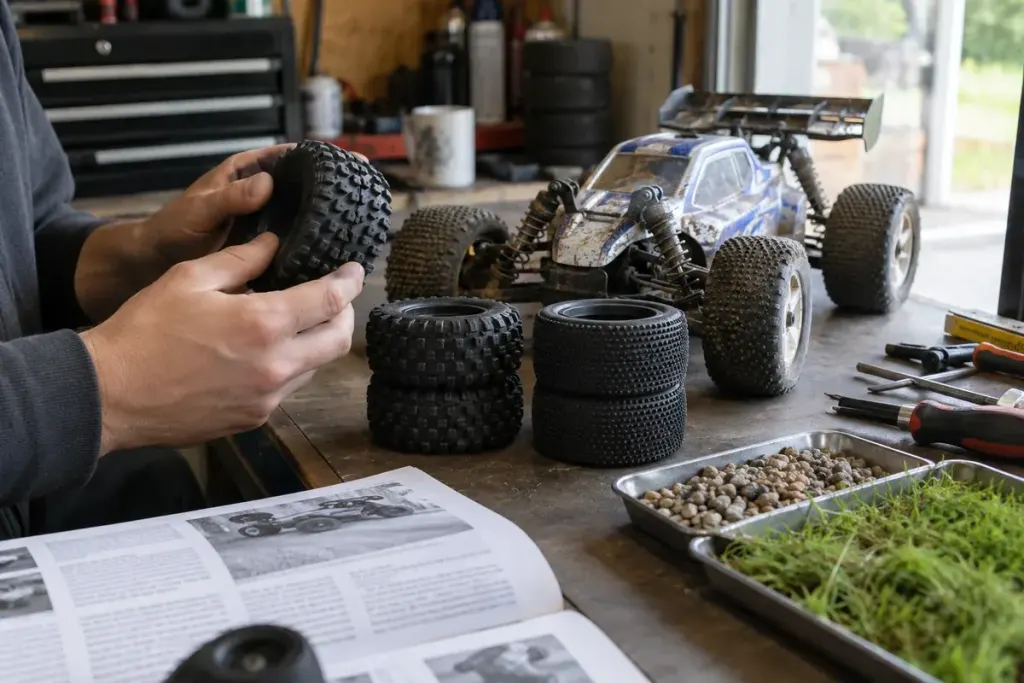
An RC car that spins its wheels on loose ground may not need a stronger motor. It may need tyres suited to the surface, or a more careful look at the setup already fitted. More power does not automatically create more useful grip.
Begin with the ground where you actually drive: packed dirt, loose gravel, grass, sand or a prepared track. “Off-road” covers several different surfaces, and a tyre that works well in one can behave poorly in another.
Check fit before tread
Confirm the wheel mounting, diameter, width and clearance required by the vehicle. A tyre that physically attaches may still be too large or heavy for the intended setup. Follow the manufacturer’s compatibility and gearing guidance rather than treating every same-size wheel as interchangeable.
Specialised designs illustrate why surface matters. Traxxas’ demonstration of paddle tyres describes a product intended for particular loose-surface conditions. It is an example of matching design to use, not a recommendation to fit paddles to every RC vehicle.
Compare behaviour, not just appearance
Use a safe, permitted driving area and change one setup element at a time. Observe acceleration, steering response, braking and how the car behaves through the same gentle turn. Avoid high-speed testing near people, animals or obstacles.
Check the condition of the tyres, wheel attachment and any glue or beadlock arrangement appropriate to the model before running. Damage or a loose wheel can make a comparison meaningless and create a hazard. Inspect again after a short run.
- Record the surface and weather conditions.
- Use a compatible tyre and wheel combination.
- Keep the rest of the setup consistent.
- Note both improved grip and new handling problems.
Extra grip is not always an uncomplicated benefit. It can change cornering behaviour and loads on the vehicle. If the car becomes difficult to control, reduce speed and reconsider the setup rather than assuming that stronger acceleration means the change is successful.
Ask local track users or a knowledgeable model shop about the exact surface, while checking advice against your vehicle’s requirements. A tyre choice becomes easier when it solves a specific problem you have observed. Start with the contact between the car and the ground before paying to make the drivetrain work harder.