
A waterproof speed controller does not make every part of an RC car indifferent to water. Bearings, fasteners, tyres, connectors and receiver-box seals have different jobs and maintenance needs. The useful question is what your exact model allows and what it requires afterward.
Start with the manufacturer’s manual before choosing the route. Wet grass, mud, deep water and salt water are not interchangeable conditions. An aftermarket component can also change the limits of a model that originally had a particular water-resistance claim.
Finish the run at the workbench
Switch off and disconnect the battery as directed. Let equipment cool and inspect the model in good light. Follow the battery manufacturer’s instructions if the pack or connections became wet; do not charge a wet, damaged or suspect pack.
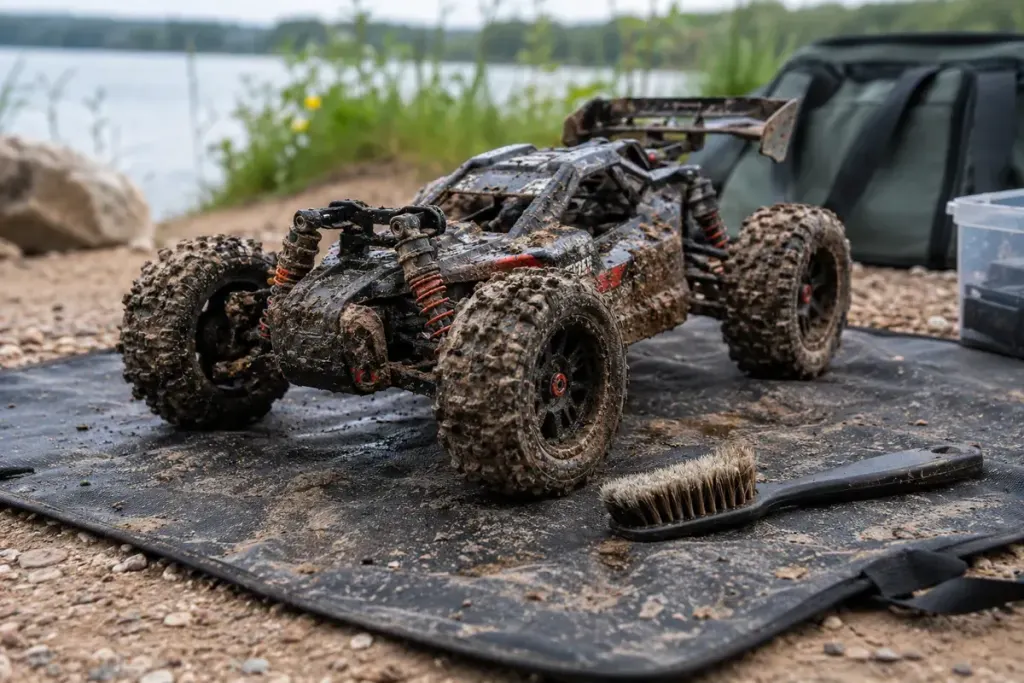
Remove loose dirt with an appropriate brush before it becomes difficult to see the hardware underneath. Use only the cleaning method approved for the model. A strong water jet can force contamination into places that ordinary surface cleaning would leave alone.
Traxxas Support’s wet-running maintenance video addresses care after water use. Use your exact model’s instructions; a demonstration on another vehicle is not permission to apply every procedure to your own.
Inspect what has changed
Once the model is clean and dry according to its instructions, check for rough wheel rotation, debris around shafts, loose hardware and damaged seals. Compare the feel with the vehicle’s normal condition. A new grinding sound is a reason to investigate before another run.
Lubricant choice and location matter. Use the specified product where the manual requires it rather than spraying the whole chassis. Receiver boxes should be opened and resealed only according to their instructions; a trapped wire or displaced seal can undermine their protection.
Keep a brief note after particularly wet outings: conditions, cleaning performed and any part needing attention. This makes a recurring rough bearing easier to recognise.
The best routine ends with a dry, inspected model stored appropriately, not a muddy car zipped into its bag until the next weekend.